Most coffee drinkers, standing in the aisle, glance at the roast date, maybe the origin, and ignore the one line that actually decides what’s in the cup. It’s usually printed small, almost as a formality: 100% Arabica. Or, more honestly on cheaper bags, no mention of species at all, which is a tell of its own. If you want to buy high quality coffee, that small print is where the decision really lives.
Coffee comes from two plants you’ll actually meet in your kitchen. There are dozens of species in the genus, but only two are grown at commercial scale: Coffea arabica and Coffea canephora (the latter sold under its trade name, Robusta). They share a name and very little else. They’re as different as a Cabernet grape and a Concord. Knowing which one you’re holding is the first step before you buy coffee beans you’ll actually enjoy.
Two Plants, Two Worlds: Where Arabica Coffee in India Begins
Arabica is the diva. It wants high altitude, somewhere between 600 and 2,000 metres, depending on who you ask, and cool, misty hillsides. It’s fussy about temperature, picky about rainfall, and easily knocked over by pests and disease. In return for all that pampering, it gives you the most aromatic coffee on earth. Most of what’s grown in Ethiopia, Colombia, the great estates of Kenya, and the high pockets of India’s Western Ghats is Arabica — and the finest arabica coffee in India comes from exactly those elevated, mist-fed slopes.
Robusta is the cousin who can sleep on a couch. It grows lower, tolerates heat, shrugs off the diseases that flatten Arabica, and produces more cherries per plant. It’s farmed across Vietnam, parts of Africa, Indonesia, and India’s warmer, lower-altitude belts. The plant is easier to grow; the bean is cheaper to buy. Hardly any of that shows up on the bag. But it shows up in the cup.
What You Actually Taste in Aromatic Coffee
Brew a good specialty coffee made from Arabica and you notice it before the cup hits the table. There’s an aroma that arrives in waves: depending on origin, you might pick up jasmine, ripe stone fruit, dark chocolate, citrus peel, sometimes a wine-like brightness. There’s acidity, in the wine sense of the word, that makes the coffee feel alive. The body is medium and clean. You can drink it black without flinching. That is what genuinely aromatic coffee tastes like.
Robusta is the other story. The aroma is flatter, with notes tasters routinely describe as woody, rubbery, peanutty, and sometimes a touch burnt. It hits the tongue with a sharper bitterness, often a grainy aftertaste, and far less of that aromatic top end. It isn’t bad in the way burnt toast isn’t bad. There’s a place for it. But as a coffee to sit with and enjoy slowly, it’s a hard ask. There’s a reason most people who think they “just don’t like black coffee” change their minds the first time someone hands them a well-roasted, well-brewed cup of premium Arabica.
The Caffeine Plot Twist
Here’s the part that confuses everyone. Robusta has nearly twice the caffeine, roughly 2.2 to 2.7 percent, against Arabica’s 1.2 to 1.5. That extra caffeine is also part of why the plant survives so well; it’s the plant’s own pesticide. And it’s why a lot of cheap “strong” espresso has Robusta blended in.
People hear that and decide Robusta must be the more serious cup. It isn’t. More caffeine doesn’t make for better coffee any more than more sugar makes for a better dessert. If you’re after flavour, complexity, the actual experience of drinking the coffee, then the caffeine number is a sideshow. When you set out to buy premium coffee, you’re paying for the cup, not the chemistry.
Where Robusta Hides (and Why Indian Coffee Beans Get a Bad Name)
Once you know the difference, you start spotting Robusta in places it isn’t named. Most instant coffee is heavily Robusta — instant processing destroys delicate aromatics anyway, and Robusta is cheap. A lot of supermarket “house” coffee leans on Robusta to keep the price tag down. Even some classic Italian espresso blends use 10 to 20 percent Robusta on purpose, because it helps build that thick, lasting crema espresso bars love.
The category to watch is the unmarked bag. If a coffee doesn’t tell you the species, there’s usually a reason. This matters because the best indian coffee beans — the bright, traceable, single-estate Arabica grown in the Western Ghats — too often get lumped in with bulk Robusta exports. They shouldn’t be.
What “100% Arabica” Actually Commits To
“100% Arabica” on a label isn’t decorative copy. It’s a sourcing standard. It means a roaster has decided, in advance, that they won’t blend in the cheaper option — not when prices spike, not when a harvest goes rough, not when nobody would notice. It’s a real constraint on a business, and it’s the mark of a serious filter coffee company or roaster.
It also means someone is paying attention upstream. Arabica coffee beans worth drinking come from estates that pick selectively (only the ripe red cherries), process carefully, and sell with traceability. You don’t end up with freshly roasted coffee of that calibre by accident. You end up there by choosing to.
Where Paul John Coffee Stands
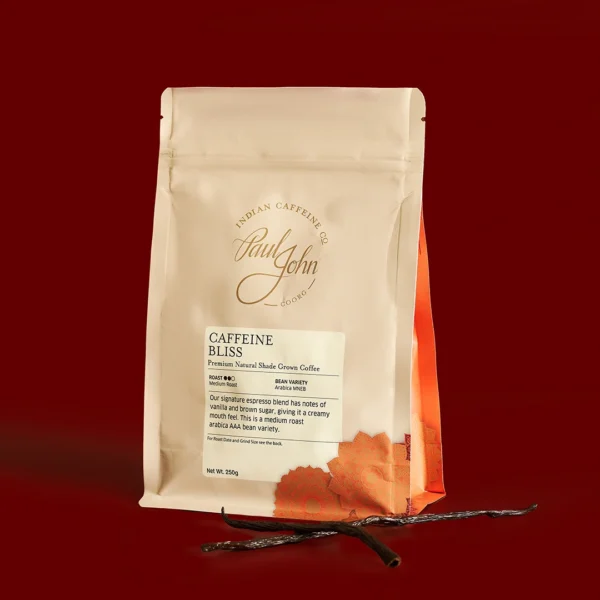
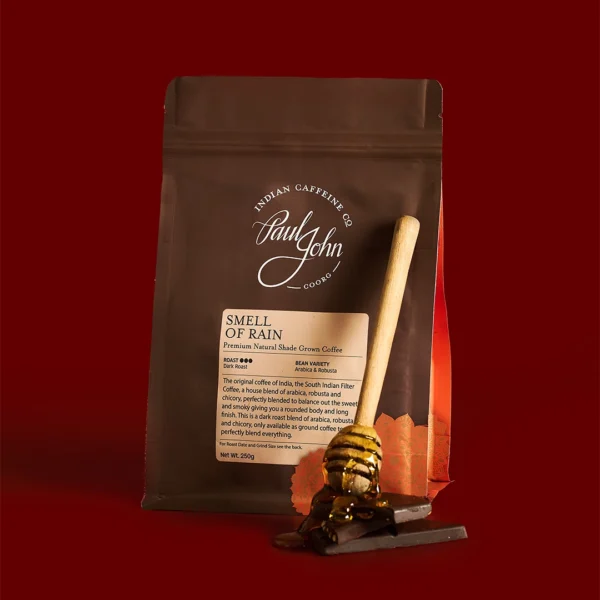
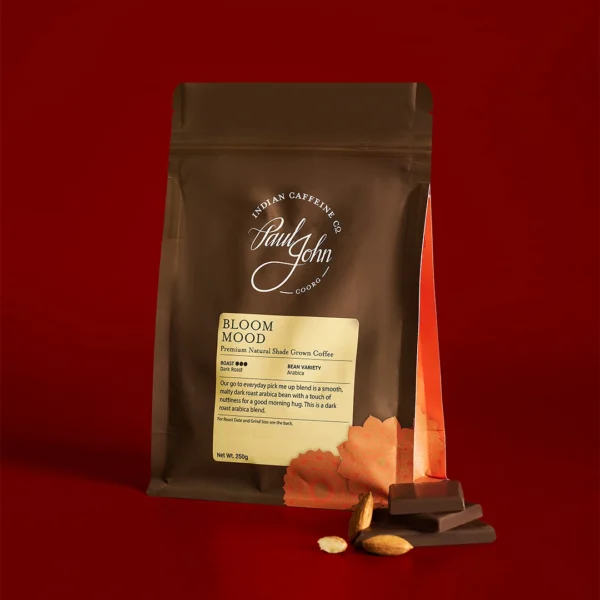
This is where the bean-on-the-bag stops being academic. Paul John Coffee’s commitment is simple and unconditional: 100% Arabica, every batch, no exceptions. That isn’t a tagline. It means our buyers walk away from lots that don’t make the grade. It means the cup profile stays consistent — bright, aromatic, clean — because the raw material is consistent. When you buy coffee online from us, what you’re tasting at home is what we tasted at the cupping table.
It’s also why we’d rather you read the label closely than buy whatever’s on offer. The species matters. Origin matters. Roast date matters. A lot of coffee marketing skips all three and sells you a mood. As a premium coffee brand in India, we’d rather sell you the coffee.
Read the Bag Before You Order Coffee Online
If you take one habit from this piece, make it this one: turn the bag around before you buy. Look for the species, the origin, the roast date. If a coffee is proud of what’s inside it, it will tell you. If it isn’t, it won’t.
Coffee is one of the few groceries where the cheap option and the great option look almost identical at three feet — same bag, similar colour, similar weight, sometimes even similar price if you aren’t careful. The difference lives in the small print. Once you start reading it, you stop drinking bad coffee — and you start choosing high quality coffee on purpose. When you’re ready to order coffee online, buy from a roaster that prints the truth on the bag.