The two are not the same drink. Half the menus that sell “cold brew” are actually serving iced coffee, and a fair share of customers asking for iced coffee really mean cold brew coffee. The names get used interchangeably, and they shouldn’t. The difference between them isn’t just packaging or marketing. It’s chemistry, and you can taste it in the first sip.
What Cold Brew Coffee Actually Is
Cold brew is a method, not a temperature. Coarse-ground coffee gets steeped in cold or room-temperature water for somewhere between 12 and 24 hours, sometimes longer, and then filtered. The grounds never meet heat. What comes out is concentrated, dark, and surprisingly smooth — and that smoothness has a real reason behind it. It works best with freshly roasted coffee, because the cleaner the beans, the cleaner the result.
When you brew with hot water, you extract everything fast: aromatic oils, sugars, acids, bitter compounds, the lot. It’s efficient, but you take the good with the rough. Cold water is a much more selective solvent. Given enough time, it pulls out the sugars and the chocolatey, nutty compounds without dragging along the same level of acidity and bitterness. By the time you filter, what’s in the jug is mellow, low-acid, and a little sweet on its own — coffee with the corners sanded down. That’s why high quality coffee beans really pay off here: the method rewards a clean, well-sourced bean.
What Iced Coffee Actually Is
Iced coffee, properly understood, is hot-brewed coffee that meets ice. The simplest version is the one most cafés use: a pot of regular coffee, cooled in a pitcher, then poured over a glass of cubes. It’s fast. It tastes like what you’d expect — your usual coffee, cold, often a bit washed out by the time the ice has done its work.
The more interesting version is the flash brew or Japanese iced coffee method, where you brew hot coffee directly onto ice. The grounds give you the full aromatics that heat extracts, and the ice flash-chills the coffee, locking those volatile compounds in instead of letting them evaporate. The result is bright, floral, and a little alive — closer to a great pour over coffee than to anything mellow. With genuinely aromatic coffee beans, it’s underrated.
So “iced coffee” could mean a watered-down afterthought or a beautifully bright cup, depending on who’s making it. Cold brew, at least, is consistent. It sets out to be smooth and low-acid, and that’s what it is.
The Caffeine Question
A common assumption: cold brew has less caffeine because the water is cold, so the extraction must be weaker. That isn’t quite how it works. Cold water extracts slowly, but the long steep more than compensates, and most cold brew is made as a concentrate at roughly a 1:4 or 1:5 coffee-to-water ratio. By the time you dilute it for drinking, you can easily end up with more caffeine per glass than a similar volume of iced coffee, not less.
It depends on the dilution, of course. Drink the concentrate straight (don’t) and you’ll feel it. Cut it 1:1 with water or milk and you’re in normal coffee territory, just smoother on the way down.
Which One to Drink, and When
The choice between them is really a choice between two experiences. If you want something bright, aromatic, and complex — the same things you’d value in a good pour-over, just cold — flash-brewed iced coffee is the call. If you want something dark, smooth, and easy to drink without flinching, especially with milk, sugar, or a scoop of ice cream, cold brew wins.
Honestly, in summer, when you’re not in the mood to think about your coffee, cold brew is the one to reach for. It’s forgiving. It tastes good with anything. It doesn’t sour as it sits. You can pour it in the morning and forget about it — which is part of why it’s become one of the most popular ways to enjoy specialty coffee at home.
Why We Made Caffeine Bliss the Way We Did
Here’s the thing about cold brew: it’s easy to make badly and surprisingly hard to make consistently well. The grind needs to be right. The steep time needs to be right. The ratio needs to be right. The filtration needs to be clean. Get any one of those wrong and the bottle goes flat, or muddy, or bitter, or thin.
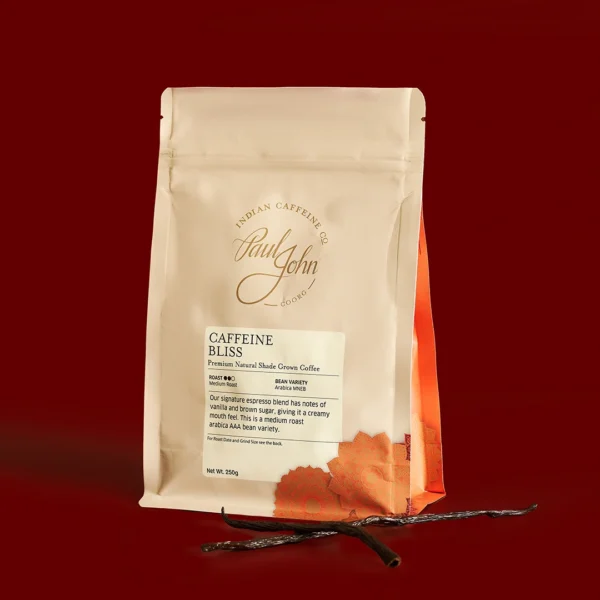
A lot of cold brew on shop shelves is exactly that — over-extracted and harsh, or watered down to a price point, or sweetened heavily to hide the cracks. Caffeine Bliss is our answer to that. It’s brewed slow, filtered clean, and bottled at a strength that’s drinkable on its own and easy to dilute if you want it lighter. Made with 100% arabica coffee beans, it tastes the way cold brew is supposed to taste — chocolatey, smooth, a little sweet without help, no rough edges. We didn’t try to do anything clever with it. We just did the unglamorous parts properly, the way a serious premium coffee brand in India should.
The Takeaway
The reason cold brew and iced coffee taste different isn’t the temperature you serve them at. It’s that one is built around a slow, cold, selective extraction, and the other is hot coffee that happens to be cold by the time you drink it. Both have their place. But once you can tell which one you’re actually drinking, the menu reads differently — and the bottle in your fridge starts to matter more.
Want to taste cold brew done right? You can buy coffee online from Paul John Coffee and have premium coffee delivered to your door. Order coffee online, brew it slow, and find out what the difference really tastes like.