

What Actually Happens Inside the Bean While It Roasts
Ask most people to describe a roast and they’ll reach for one word: light, medium, or dark. That’s not wrong, exactly. It’s just incomplete. Long

Ask most people to describe a roast and they’ll reach for one word: light, medium, or dark. That’s not wrong, exactly. It’s just incomplete.
Long before colour enters the picture, the bean is going through a real transformation. Heat, pressure, and a chain of chemical reactions are all happening inside it, in a fairly specific order. Once you understand that order, roasting stops looking like guesswork and starts looking like a process you can actually follow.
Here’s what’s really going on inside the bean, from the moment it hits heat to the moment it’s ready to brew.
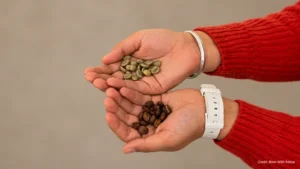
As a green bean heats up, it loses moisture, drops in density, and swells to roughly a fifth larger than it started. That’s not just a visual change. The bean’s internal structure is softening and reorganising itself from the inside out.
Somewhere in this process, the papery outer skin called chaff separates and gets carried off by the roaster’s airflow. It’s one of the easiest signs to spot that things are moving along the way they should.
For most of this early stage, the bean absorbs more heat than it gives off. But that balance flips as steam and carbon dioxide build up pressure inside with nowhere to go. Eventually the bean’s structure gives way, and you hear it: an audible pop known as first crack, usually somewhere between 196 and 207°C depending on the bean’s density and moisture.
That pop isn’t just a milestone to check off. It’s the moment the bean physically reorganises itself right as the real flavour-building chemistry is about to begin.
Once that shift happens, the bean’s natural sugars, acids, and amino acids start reacting with each other. Two things are doing most of the work here: the Maillard reaction, a browning reaction between amino acids and sugars that kicks in around 160°C, and caramelization, where sugars break down further under heat.
Together, these two reactions are responsible for the brown colour, the aroma, and a large share of the flavour in your cup. Some of the compounds formed here recombine into melanoidins, which is part of why a roasted bean looks nothing like the pale green one it started as.
At the same time, chlorogenic acids, naturally present in green coffee, start breaking down. This matters more than it sounds. How far this breakdown goes has a direct effect on how sharp or bitter the final cup tastes.
If this kind of detail genuinely interests you, Scott Rao’s Coffee Roasting: Best Practices is one of the more thorough breakdowns of the chemistry out there, worth a read for anyone who wants to go deeper.
There’s a ceiling, though. Push a roast too far past the second crack, usually around 220 to 224°C, and the bean starts to carbonize instead of develop. At that point you’re not building flavour anymore, you’re burning it away. The beans turn oily, taste bitter, and lose the character that made the origin worth roasting in the first place.
Good roasting is as much about knowing when to stop as getting the start right.
Here’s the part most people never think about. A good roast isn’t judged by how dark it looks or how long it spends in the roaster. What actually matters is development, the internal change that makes a bean porous enough for water to properly pull flavour out of it during brewing. pick up a bag of Light Roast made for exactly this method. Order coffee online today, and taste what pour over is supposed to taste like.
A bean can look perfectly roasted on the outside and still be underdeveloped inside. When that happens, you get a cup that tastes grassy or vegetal, no matter how good the beans were to start with.
This is why roasting is a craft and not a formula. A skilled roaster tracks how fast the temperature is climbing at every stage, from drying to browning to first crack to development, instead of chasing a target colour. The goal is a bean that’s properly developed inside while still holding on to its natural sweetness and aroma.
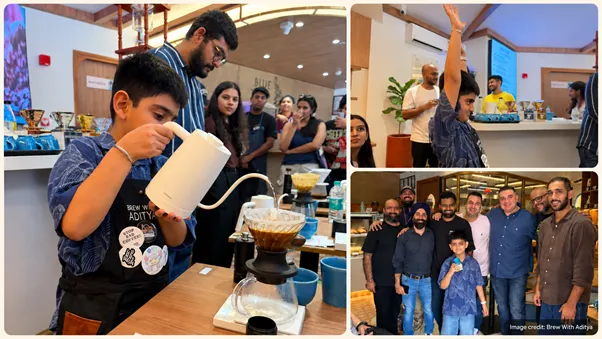
We got a nice reminder of this recently, at the HARIO V60 Brewers Cup in Delhi. One of the contestants that day was Aditya Singh Sharma, all of eight years old and the youngest roaster in India, brewing alongside experienced professionals. He wasn’t there as a novelty act. He was genuinely trying to work out what was happening in his own cup.
We got talking afterward, and it turned out our peaberry had already caught his attention. That’s the kind of detail that tells you someone is paying attention to more than just technique.

It’s not every day you meet someone that young already asking why a bean tastes the way it does, instead of just enjoying that it does. That curiosity is exactly the mindset this article is written for. Understanding roasting, at any age, starts with the same question: what is actually happening inside the bean?
Roasting well was never about chasing a darker colour or a longer roast time. It’s about understanding the bean’s own journey, moisture loss, the shift from absorbing heat to releasing it, the Maillard reaction and caramelization, chlorogenic acid breakdown, and proper development, and respecting every stage instead of rushing past it.
Curious what that kind of attention actually tastes like? Explore our peaberry coffee →
Ask most people to describe a roast and they’ll reach for one word: light, medium, or dark. That’s not wrong, exactly. It’s just incomplete. Long
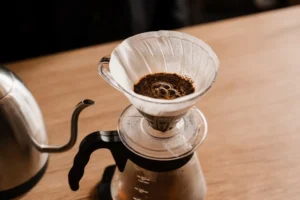
There’s a reason pour over coffee has quietly taken over café counters and kitchen counters alike. It isn’t a gimmick or a barista flex —
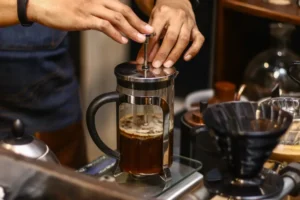
Of all the ways to make coffee at home, none is as forgiving on equipment and as unforgiving on technique as the french press. There’s